3 August 2026
Vinod Rathod: the voice behind the songs you grew up with
You know the songs. You may not know the name. Ahead of his first Australian concert, here is the story of the man who sang them.
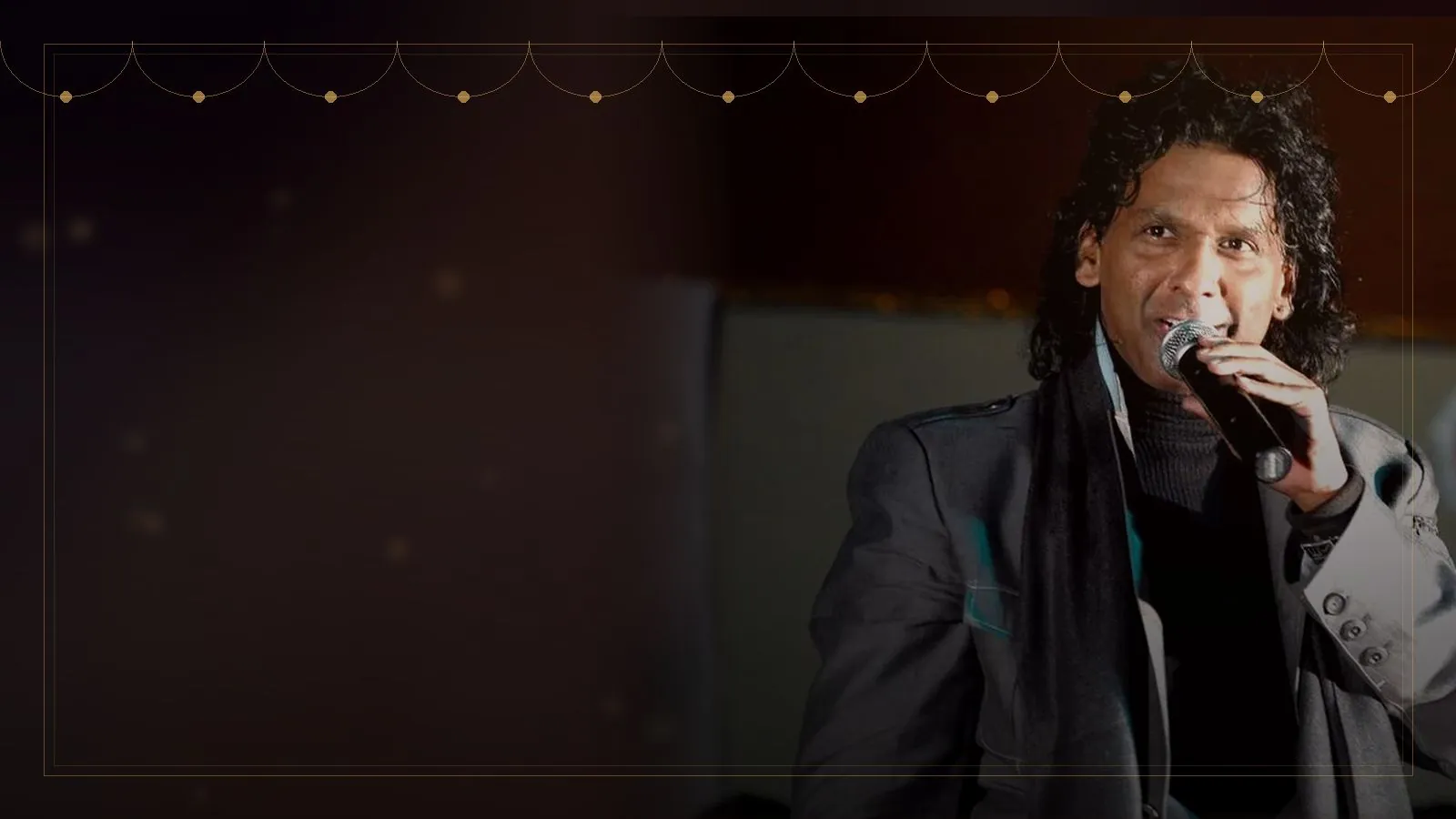
There is a particular kind of fame that playback singers have in India. Everybody knows the song. Fewer people know who sang it. Vinod Rathod has spent nearly forty years being the voice in the room without necessarily being the face on the poster — and on 14 November he performs in Australia for the first time.
Born into it
He was born in Mumbai in 1962, the son of the classical singer Pandit Chaturbhuj Rathod. His brother Roop Kumar Rathod became one of India's finest ghazal singers. His other brother, Shravan, was half of Nadeem–Shravan, the composing duo behind some of the biggest soundtracks of the 1990s. Music was not a career choice in that house so much as the weather.
That classical grounding is the thing to listen for. It is why he can carry a stadium-sized dance number and then hold a ghazal in the same evening without the voice sounding like it belongs to two different singers.
The cassette that started it
The break came in 1986, and it came the old-fashioned way. The composer Usha Khanna heard his voice on a demo cassette and called him in to record a qawwali — "Mere Dil Mein Hai Andhera, Koi Shamma To Jala De", sung with Mohammed Aziz for the film Do Yaar. He went on to record more than forty songs for her.
Two years later, Shiv–Hari brought him into Yash Chopra's Vijay, singing alongside Lata Mangeshkar. After that, the doors were open.
The decade that made him
Then came the early nineties, and a run that anyone who was listening to Hindi film music at the time will recognise instantly. Deewana in 1992. Roop Ki Rani Choron Ka Raja and Khalnayak and Baazigar in 1993. Gentleman in the same year. For the rest of that decade his was one of the most in-demand voices in the industry, working with Laxmikant–Pyarelal, Anu Malik, Nadeem–Shravan and Ismail Darbar.
A second wave followed at the turn of the century — "Dholi Taro Dhol Baje" from Hum Dil De Chuke Sanam, "Chalak Chalak" from Devdas, "M Bole Toh" from Munna Bhai M.B.B.S. Songs that are still, twenty years later, the ones that clear a dance floor of people standing still.
Three and a half thousand songs, fourteen languages
The number that surprises people is the catalogue: more than 3,500 recorded songs, across Hindi, Gujarati, Marathi, Punjabi, Bhojpuri, Bengali, Odia, Tamil, Telugu, Kannada, Rajasthani, Sindhi, Nepali and more. Two Filmfare nominations for Best Male Playback Singer along the way.
For a Sydney audience drawn from every part of India, that range matters. Whatever language you grew up speaking at home, there is a reasonable chance he has sung in it.
What the night will actually be like
This is a seated, indoor concert at The Regency in Auburn, with a live seven-piece band on stage for the whole evening. Not backing tracks. These songs were recorded with real musicians, and that is how they should be heard — with the tabla and the dholak in the room with you.
Our honest expectation is that the audience will be louder than the stage more than once. That is rather the point.
See the full event details, the songbook and ticket information