
30 June 2026
What it takes to bring an artist from India to a Sydney stage
Roughly nine months, four government departments and a great many phone calls at inconvenient hours. A look at how a concert is actually built.
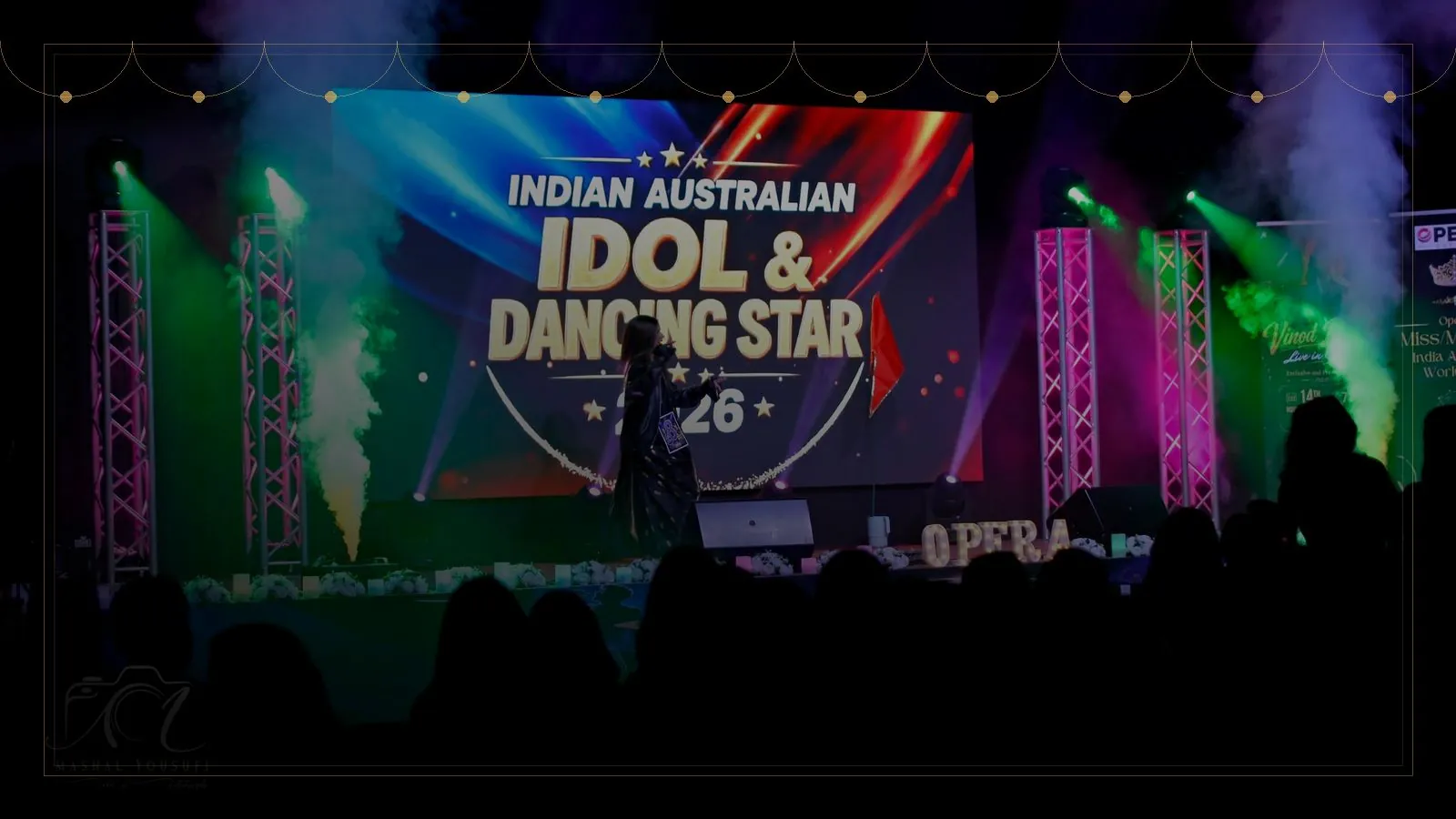
People sometimes assume that putting on a concert means booking a singer and hiring a hall. We thought it might be interesting to lay out what actually happens between the first phone call and the first note.
Nine months out: the conversation
Everything starts with availability. Artists of this calibre are booked well ahead, and an Australian date has to fit around a touring schedule built primarily around India, the Gulf and North America. The first conversation is rarely about money. It is about whether there is a fortnight in the calendar at all.
Seven months out: the venue
Venue and date are chosen together, because neither works without the other. A seated theatre-style room changes the whole shape of an evening compared with a hall of standing tables. Capacity determines the ticket price, which determines whether the show is viable at all.
Then come the unglamorous parts: public liability, security staffing ratios, accessible seating positions, fire egress, parking capacity on a Saturday night in Auburn.
Six months out: visas and paperwork
Bringing performers into Australia to work requires the right visa class, sponsorship documentation and evidence of the engagement. It is not difficult so much as unforgiving of delay. This is the part that quietly decides whether a concert happens, and it is the reason we programme so far ahead.
Four months out: the sound
A playback singer with a classical grounding needs a room that will let the voice through. That means a proper front-of-house mix, monitors the band can actually work with, and a PA specified for the space rather than whatever the venue happens to own.
We bring in specialist contractors for sound and lighting on every show. It is the single largest line in the budget after the artist, and it is the first thing an audience notices when it has been skimped on.
Three months out: getting the word out
Announcement, artwork, ticketing, and then the long campaign — paid social targeted to Indian-Australian households across Sydney, community media, and the WhatsApp and community networks where our audience actually organises itself. This is also where sponsors come in, and where their support becomes visible.
The week of: the run sheet
Load-in, sound check, a run sheet that everybody has read, volunteers briefed, stalls positioned, door team on the list. Forty people who mostly do not get paid, working a fourteen-hour day so that two thousand people can have an evening that feels effortless.
Why we tell you this
Partly because it is genuinely interesting. Partly because when people ask why tickets cost what they cost, or why we announce so far ahead, this is the answer.
And partly because if you have read this far, you might be the sort of person who would enjoy being on the other side of it — as a volunteer, a stallholder or a sponsor.